
Beam vs Spot vs Wash: Moving Head Buying Guide
How rental companies and event production teams choose moving heads by role, throw distance and show mix — not by wattage alone.
In this guide
1. Beam, spot and wash at a glance
The three names describe the shape and purpose of the light, not a quality ranking. A beam fixture is not a better spot, and a wash is not a downgraded beam. Each role solves a different problem on stage.
| Role | Light character | Optics and effects | Typical use | Check first |
|---|---|---|---|---|
| Beam | Narrow, hard-edged, near-parallel shaft | Fixed or narrow zoom, prism, frost; limited gobo detail | Aerial beams, long throw, clubs, concerts, accent | Beam angle, output at distance, focus and edge |
| Spot | Adjustable and focusable; hard or soft edge | Zoom, gobo wheels, iris, prism, frost | Key light, gobo patterns, texture, theatre, corporate | Gobo quality, focus, zoom range, color system |
| Wash | Wide, soft-edged, even field | Wide zoom or fixed angle, color mixing; no gobo | Stage wash, cyclorama, audience, architecture | Beam angle, uniformity, dimming, color mixing |
2. Beam fixtures: the shaft is the effect
A beam fixture is chosen when the visible shaft of light is the effect — aerial beams over a crowd, long-throw accents, club and concert looks, or architectural impact. The lens and reflector are designed to keep the beam tight and parallel rather than to cover a stage evenly.
- Beam angle and throw: check the angle at the distance you will actually use. A beam that looks tight in a demo hall can look thin at the back of a festival site.
- Output at distance: ask for photometric data or a measured demo at the intended throw, not only the LED wattage.
- Focus and edge: confirm the beam can be focused cleanly and that the edge stays sharp across the zoom range.
- Effects: prism and frost add looks, but they can soften the beam character. Test them in the mode you will rent.
- Coverage: a beam is not a stage wash. Plan separate wash or spot fixtures for area coverage.
3. Spot fixtures: the flexible workhorse
Spot fixtures focus light, project gobos and can be shaped with an iris, prism or frost. They are the most flexible moving-head role for theatre, corporate, live music and television because one fixture can act as a key light, a pattern projector or a texture light.
- Gobo system: check static and rotating gobo wheels, gobo quality, replacement availability and whether custom gobos are supported.
- Focus and zoom: confirm focus at the working distance and that the zoom range matches your stages.
- Edge quality: a spot may need a hard edge for patterns or a soft edge for blending; test both.
- Color: check color mixing, color-wheel options and whether the color system matches the rest of your fleet.
- Effects: iris, prism and frost are useful, but confirm they do not compromise the core spot performance.
4. Wash fixtures: coverage and color
A wash fixture covers an area with soft, even color. It is the base layer for most stages: front wash, back wash, side color, cyclorama coverage, audience light and architectural color. Wash fixtures usually have a wide beam angle or a zoom range and no gobo system.
- Beam angle or zoom: choose based on the area to cover and the mounting distance. A narrow wash at a short distance creates hot spots; a wide wash at a long distance loses intensity.
- Uniformity: check for hot spots, color fringing and even coverage across the field.
- Color mixing: confirm smooth blends, low color shadowing and consistent color across the fleet.
- Dimming: check the low-end dimming curve; smooth dimming matters for theatre and corporate work.
- Cyclorama: a dedicated cyc fixture is usually a better choice than a general wash for even backdrop coverage.
5. Hybrid fixtures: more modes, not automatically more performance
A hybrid moving head offers beam, spot and wash modes in one fixture. That can reduce the number of fixture types in a rental fleet and give smaller shows more flexibility. The trade-off is that a hybrid has to balance three optical roles in one body, so its performance in each mode may differ from a dedicated fixture.
A hybrid is usually a good fit when truck space, warehouse space or crew training is the constraint, or when a rental fleet needs broad flexibility for unpredictable shows. Separate beam, spot and wash fixtures can still be the better choice when a specific role is rented repeatedly and the fleet needs the best performance or the simplest service path in that role.
6. Planning a rental fleet by show mix
There is no universal beam/spot/wash ratio. The right mix comes from the shows you actually rent. A practical exercise is to list your last ten shows and your next ten confirmed projects, then mark which roles each one needed.
Corporate, theatre and conference
Usually wash-heavy, with spot fixtures for key light, gobos and texture. Beam fixtures are less central unless the show calls for aerial effects.
Concerts, clubs and festivals
Beam and wash are the core layers, with spot fixtures for key light and gobo looks. Outdoor shows add an IP-rating requirement.
Touring and multi-purpose rental
Hybrids can reduce the fixture count and give the fleet flexibility. Check that each mode is good enough for the shows you actually sell.
Then add the operational constraints: warehouse space, truck space, power distribution, rigging weight, crew familiarity, flight-case size and spare parts. A fixture that is slightly more expensive but shares consumables and service procedures with the rest of the fleet can be cheaper per show.
Indoor and outdoor fleets
For outdoor stages, festivals and temporary installations, specify an appropriate IP rating and check the connectors, cable entry and mounting method — not only the enclosure rating. Indoor fixtures can remain the main fleet for theatre, studio and corporate work; mixing indoor and outdoor fixtures in one fleet adds inventory but gives more flexibility.
7. Specification checklist for moving-head buyers
Use the same checklist for every quotation so the comparison is like for like. A lower price per fixture is not a lower cost per show if the fixture needs more power, more spares or more setup time.
Optics and output
- Beam angle or zoom range, and the intended throw distance.
- Photometric output at the working distance, not only the LED wattage.
- Field uniformity, edge quality and focus range.
- Color mixing, color temperature and consistency across the fleet.
- Dimming curve, strobe range and low-end smoothness.
Effects and control
- Gobo wheels (static and rotating), gobo quality and custom-gobo support.
- Iris, prism, frost and any effect that affects the beam or spot character.
- DMX512, RDM, Art-Net or sACN support as required by the console.
- DMX channel modes and the channel count you will actually use.
- Pan and tilt range, speed and noise level for theatre or studio work.
Power, rigging and environment
- Power consumption, voltage range, current draw and daisy-chain limits.
- Weight, rigging points, safety-cable provision and flight-case options.
- IP rating and connector protection for outdoor use.
- Operating temperature and ventilation requirements.
Fleet and service
- Spare parts, connectors, fans, power supplies and firmware update method.
- Fixture personality files and compatibility with your console.
- Batch consistency and a reference unit for future fleet additions.
- Packaging, shipping protection and spare ratio based on your service history.
8. Featured moving head range
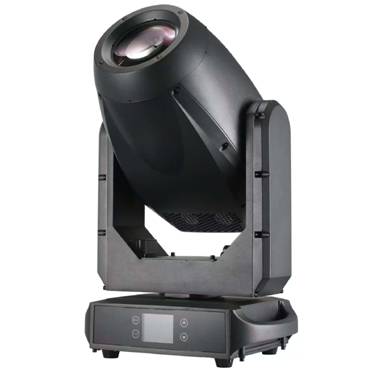
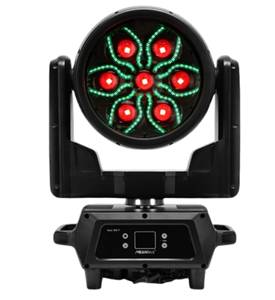
The fixtures below cover outdoor hybrid, indoor hybrid and wash/effect roles. Specifications are taken from the linked product pages; confirm the exact configuration and current documentation in the quotation.
Outdoor / IP65
Indoor / touring hybrid
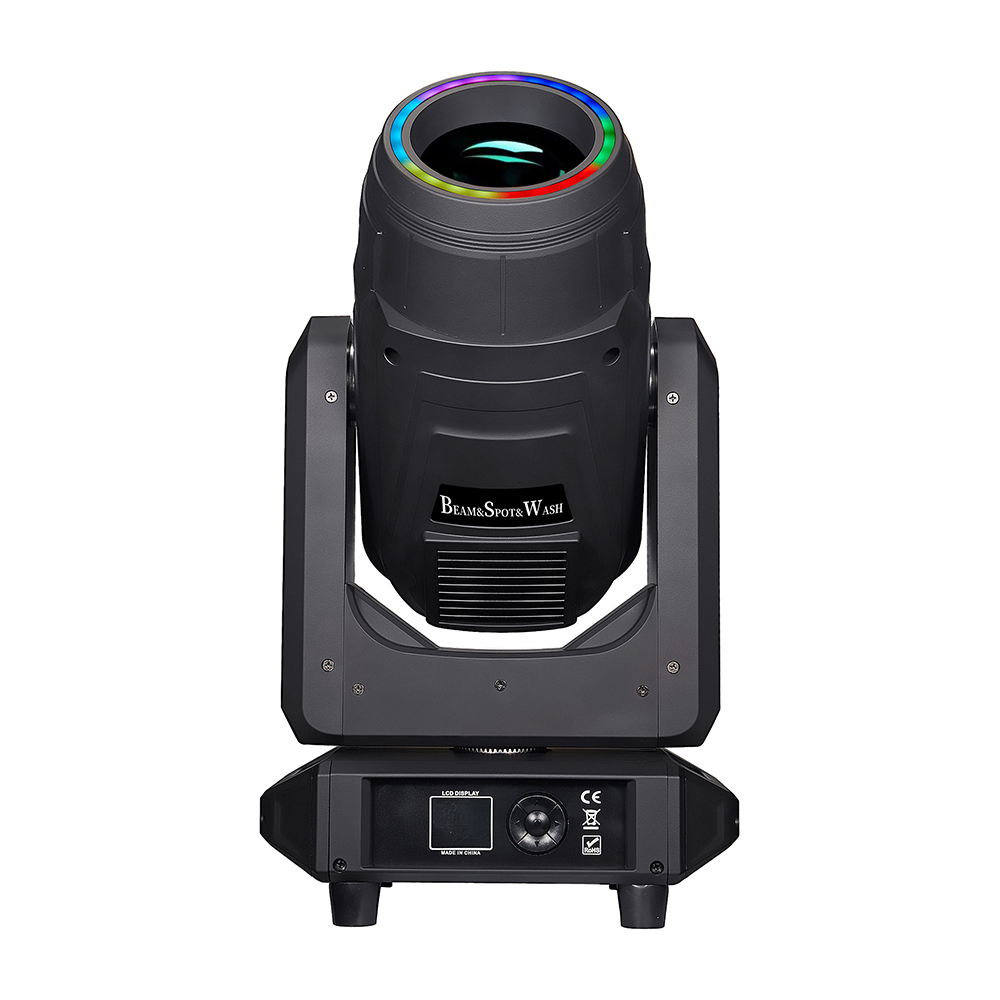
STORM 300BSW PRO
300W LED hybrid beam, spot and wash moving head for indoor stages, theatres, clubs and touring rental fleets.
View product →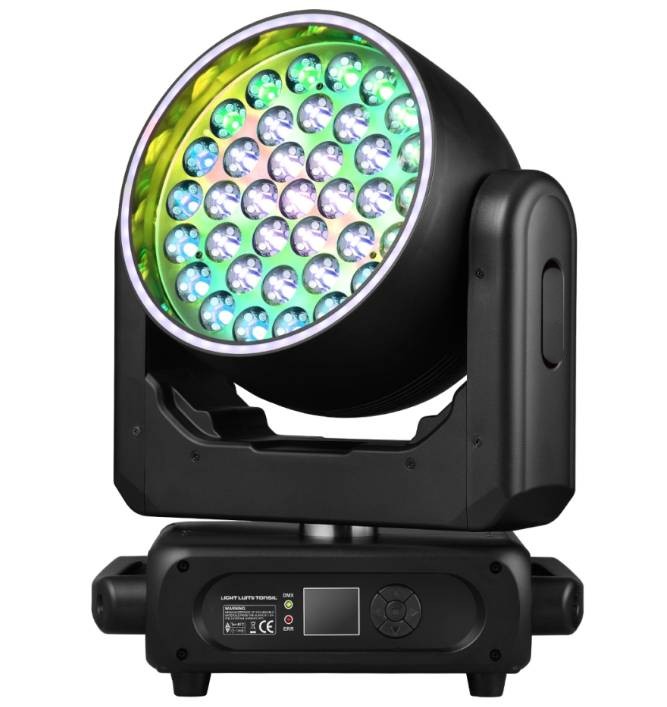
AURA STRIKE 3715
37×15W RGBW pixel aura zoom wash moving head with 222 independent aura segments and 4°–60° motorized zoom.
View product →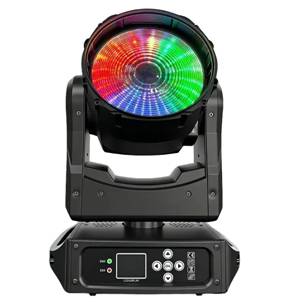
Hybrid MAC ONE
Compact 150W RGBL hybrid beam and wash moving head with 4°–27° zoom for touring, rental and live events.
View product →Need a mixed fleet? Send the show types, throw distances, quantities and control system; the team can propose a combined beam/spot/wash package rather than a single fixture type.
9. Product comparison: five moving heads
The table compares the featured fixtures by role. Specifications are taken from the product pages; confirm the exact configuration, options and current documentation in the quotation.
| Fixture | Role | Light source | Zoom / beam | Best use | Environment |
|---|---|---|---|---|---|
| STORM 300BSW IP | Hybrid beam / spot / wash | LED engine | Hybrid zoom optics | Outdoor concerts, festivals, touring rental | IP65 |
| STORM 300BSW PRO | Hybrid beam / spot / wash | 300W LED | Hybrid zoom optics | Indoor stages, theatres, clubs, touring | Indoor |
| AURA STRIKE 3715 | Wash / pixel effect | 37 × 15W RGBW | 4°–60° motorized zoom | Stage wash, aura effects, rental productions | Indoor |
| MAC 760 AURA FXIP | Wash / aura effect | 7 × 60W RGBW + 12 × 3W | Wash zoom with Aura FX | Outdoor touring, pixel mapping, live events | IP65 |
| Hybrid MAC ONE | Hybrid beam / wash | 150W RGBL | 4°–27° zoom | Compact touring, rental, live events | Indoor |
For a broader comparison framework, see the product comparison resources or request a project-specific selection review.
10. Procurement questions to ask before ordering
Ask these questions for the exact model and configuration, not only for the product family. The answers should be written into the quotation so sales, engineering and the rental team work from the same assumptions.
- MOQ: What is the minimum order quantity for this model, finish and configuration? Is a mixed-model trial order possible? (MOQ is project-dependent and should be confirmed in the quotation.)
- Lead time: What is the production lead time at our quantity, and what changes if we add customization, packaging or a private label?
- Sample evaluation: Can we evaluate a sample or a small batch? What test criteria should we use for output, color, gobos, DMX response and mechanical condition?
- OEM/ODM: What branding, packaging, connector, firmware or configuration changes are possible, and what is the approval process?
- Compliance documents: Which current certificates or test reports apply to this exact model and destination market? Request the documents rather than relying on a logo.
- Warranty and spares: What warranty policy applies to this model and configuration, and which spare parts should a rental fleet keep on the shelf?
- Fleet consistency: How do you control output, color and firmware consistency across batches, and can we keep a reference unit?
- Packaging and terms: Is the fixture supplied in a flight case, carton or pallet? Confirm Incoterms and payment terms in the quotation; do not assume them from the product page.
11. Common moving-head specification mistakes
- Buying by wattage. Output, beam angle, optics and uniformity matter more than the LED wattage number.
- Buying beams only. A beam-heavy fleet struggles on corporate, theatre and wash-heavy work.
- Assuming a hybrid is equally good in every mode. Test beam, spot and wash separately.
- Ignoring power and rigging. Weight, current draw and distribution limits affect how many fixtures you can actually use.
- Ignoring the console. Confirm DMX channel modes, personality files and protocol support before ordering.
- Forgetting spares. A fleet without spare parts and a service plan loses shows when a fixture fails.
- Using indoor fixtures outdoors. Rain, dust and connectors are not covered by an indoor rating.
12. Testing and acceptance
Define the acceptance criteria before the order, then test against the same criteria on the sample and on the delivered batch. This is especially important for rental fleets, where one inconsistent fixture can affect a show and the fleet's color consistency.
Sample test
- Beam angle, focus and edge quality at the intended throw distance.
- Gobo focus, gobo rotation, iris, prism and frost in the modes you will use.
- Color mixing, color consistency and low-end dimming.
- Pan and tilt range, speed, noise and mechanical play.
- DMX response, channel modes, RDM and firmware version.
- Connectors, cable entry, seals and housing condition after handling.
Batch acceptance
- Compare a sample from the delivered batch against the reference unit.
- Check serial numbers, firmware version and packaging condition.
- Test a percentage of the batch across output, color and movement.
- Record the results and keep the reference unit for future orders.
13. Project references
These case studies show how moving heads, strobe/wash and pixel fixtures are combined in real rental and touring projects.
- European touring strobe wash project — layered strobe, blinder and FX roles for touring productions.
- Vietnam rental stage lighting OEM project — rental fleet consistency and repeat supply.
- Middle East festival and indoor club project — festival, club and live-entertainment fixture mix.
14. Frequently asked questions
What is the difference between beam, spot and wash?
Beam fixtures create a narrow, hard-edged shaft for aerial effects and long throw. Spot fixtures focus light and project gobos for key light, patterns and texture. Wash fixtures cover a wide area with soft, even color.
Which moving head is best for a rental company?
There is no single best type. Start from the shows you actually rent: corporate and theatre work usually needs wash and spot; concerts and clubs usually need beam and wash; touring fleets often benefit from hybrids. Build the mix from your own rental requests.
Can one hybrid replace separate beam, spot and wash fixtures?
It can reduce the number of fixture types, but compare the hybrid's beam, spot and wash performance separately. Check beam angle, gobo and focus quality, wash uniformity, weight, power and service access before deciding.
What beam angle do I need?
Match the angle to the throw distance and the area you need to cover. A narrow beam at a long distance creates an aerial shaft; a wide wash at a short distance covers an area. Ask for photometric data at your working distance rather than choosing by angle alone.
Do I need IP65 for outdoor events?
For temporary outdoor stages, an appropriate IP rating helps with rain and dust exposure. Also check connectors, cable entry, mounting and drainage; the enclosure rating alone does not cover the whole installation.
How many moving heads should a rental fleet carry?
There is no universal number. Map your last ten shows and next ten confirmed projects, count the roles each one needed, and add a spare ratio based on your service history and show criticality.
What should I check in a moving-head demo?
Test beam angle and focus at the intended distance, gobo quality, color mixing, dimming, pan and tilt, noise, DMX response and the mechanical condition of the fixture. Test the exact modes you will rent, not only the most impressive effect.
Can moving heads be customized for OEM or rental fleets?
OEM/ODM options such as branding, packaging, connector configuration and firmware settings can be discussed with the sales and engineering team. Confirm the exact customization, MOQ and approval process in the quotation.
15. Next step
If you are specifying a rental fleet or an outdoor production, send the show types, throw distances, quantities, control system and project timeline. The engineering team can review the beam/spot/wash mix and prepare a project-specific quotation.
Request Engineering Quotation
Please provide your project information. Our team will reply with suitable solutions and pricing.