
IP65 Festival Stage Lighting: How to Choose Fixtures for Outdoor Music Festivals
A specification and procurement guide for rental companies, festival production teams and stage suppliers: what IP65 actually protects, where water really gets in, how to size power and coverage, and what to test at load-in.
In this guide
- 01. Why a festival is different
- 02. What IP65 actually covers
- 03. Where water really gets in
- 04. Power distribution
- 05. Rigging and wind
- 06. Festival fixture roles
- 07. Sizing a festival rig
- 08. Daylight, night and control
- 09. Specification checklist
- 10. Featured range
- 11. Product comparison
- 12. Common mistakes
- 13. Load-in acceptance
- 14. Project references
- 15. FAQ
1. Why a festival is not just an outdoor show
A single outdoor concert and a three-day festival use similar fixtures but place very different demands on them. The differences are operational, not cosmetic, and they should change what you specify.
| Condition | One-night outdoor show | Multi-day festival | What it changes in the specification |
|---|---|---|---|
| Exposure time | Hours, then strike | 2–5 days, rigged continuously | Seals, gaskets and connectors face repeated wet–dry cycles |
| Weather | One forecast | Rain, wind, dust and UV across several days | Dust ingress protection matters as much as water |
| Power | Often a single distro | Temporary generators, long runs, shared circuits | Voltage drop and daisy-chain limits become design constraints |
| Labour | Your own crew | Mixed local crew, often unfamiliar with the fixture | Connector type and service access must be obvious and consistent |
| Failure cost | One show | An entire weekend programme | Spare ratio and field-serviceability are part of the buying decision |
The practical consequence is that a fixture which is fine for a covered stage with a roof can still be the wrong choice for a festival stage that is open on three sides and takes driving rain at 45°.
2. What IP65 actually covers — and what it does not
The IP code is defined by IEC 60529. The two digits answer two separate questions, and both matter at a festival.
| Digit | Value | Meaning | Festival relevance |
|---|---|---|---|
| First digit | 6 | Dust tight — no ingress of dust | Dusty tracks, gravel, farm fields and wind-blown grit |
| Second digit | 5 | Protected against water jets from any direction (6.3 mm nozzle, 12.5 L/min, 3 m, 3 minutes) | Driving rain and hose-down, not submersion |
Two further points are worth writing into the specification. First, the rating applies to a tested configuration: a fixture tested with its connectors capped may not carry the same rating once a cable is plugged in. Second, an IP rating is a design claim; the evidence is the test report. Ask which standard was used, which laboratory performed the test, and which model and configuration the report covers.
3. Where water really gets in
In service, IP65 fixtures rarely fail because the housing cracked. They fail at the interfaces. These are the five paths worth inspecting on any festival fixture before you commit a fleet to a weekend.
- Power and DMX connectors. An IP-rated connector only performs as rated when it is mated or correctly capped. Unused outputs left open in the rain are a common failure. Confirm the connector type and whether caps are supplied.
- Cable entry and glands. The gland is a seal, and it is only a seal if the cable diameter matches its range. A gland closed on a cable that is too thin lets water track along the jacket.
- Condensation. A fixture that heats up in the afternoon and cools overnight can draw moisture inward through any imperfect seal. Vent design and pressure equalisation matter on multi-day events.
- Mounting orientation and drainage. A fixture designed to shed water in one orientation may pool water in another. Check the manufacturer's mounting guidance and avoid inverted positions that trap water around a gland.
- Cable management and drip loops. Water follows cable. A drip loop before the connector, and cable supported off the ground, does more for reliability than a higher IP number on the housing.
For the broader IP-rating framework, see the IP65 outdoor stage lighting buying guide. This guide concentrates on the festival-specific conditions.
4. Power distribution: the constraint most rigs hit first
At a festival, power is usually temporary, shared and further from the stage than in a venue. Three numbers decide whether the rig is practical: total connected load, the capacity of the distribution you will actually be given, and the current limit of the connector and daisy-chain you plan to use.
Step 1 — total connected load
Add the rated power of every fixture on the circuit. Use the fixture's rated consumption, not the LED wattage, and add the control and distro overhead.
Step 2 — daisy-chain limits
Daisy-chaining is limited by two separate things: the current rating of the connectors and cable, and the manufacturer's stated maximum number of fixtures per chain. The lower number governs. Long festival cable runs also introduce voltage drop, which shows up as dimmer output and erratic behaviour at the far end of a chain.
Step 3 — balance and separation
Balance single-phase loads across phases, keep audio and lighting distro separated where the site allows, and confirm the earthing arrangement with the site electrician. None of this is lighting-specific, but all of it determines whether the lighting works on the night.
5. Rigging, wind and ground support
Festival stages are usually temporary structures, and wind is the load case that governs them. A truss that is rated for a static hang is not automatically rated for the same hang in wind, and the fixture weight is only one term in the calculation.
- Use the fixture's actual weight from the datasheet, and add clamps, cables and safety bonds.
- Confirm the structure's wind rating for the site and the season with the stage supplier — not from a generic truss table.
- Use secondary retention. Every fixture should have a safety bond independent of its primary clamp.
- Keep the centre of gravity low and avoid tall, narrow stacks on ground support in exposed sites.
- Plan for the site's stop-work wind speed and decide in advance which fixtures come down first.
6. Festival fixture roles
Festival rigs are built from roles, not from a single fixture type. The list below is the working vocabulary used on outdoor stages; the right mix comes from the shows you actually supply.
| Role | Job on a festival stage | Typical position | Specify by |
|---|---|---|---|
| Front wash | Even, colour-consistent light on performers and stage front | Front truss, audience side | Beam angle at the throw, uniformity, dimming |
| Back / top wash and aerial | Depth, silhouettes and visible beams over the crowd | Rear and mid trusses | Output at distance, zoom range, beam edge |
| Pixel and strobe bars | Outlining the stage, look changes, pixel-mapped effects | Set edges, risers, backdrop frame | Pixel pitch and mapping, segment control, IP protection |
| Blinders | Audience light and call-and-response moments | Front truss, aimed at the crowd | Output, beam angle, warm-white quality |
| Cyc / backdrop wash | Even colour on the backdrop or LED screen surround | Upstage floor or low truss | Field uniformity, blending, colour consistency |
| Strobe / impact panels | High-output impact looks and hits | Rear truss and risers | Output, strobe rate, zone control |
7. Sizing a festival rig without guessing
There is no honest fixtures-per-metre rule, because coverage depends on the beam angle and the throw distance. The method below uses the fixture's own photometric data, so the result is specific to your stage.
- Measure the throw. Distance from the fixture position to the surface it must cover.
- Calculate the coverage diameter. Diameter ≈ 2 × distance × tan(beam angle ÷ 2).
- Divide by the area. Stage width divided by coverage diameter gives the number of fixtures for one row.
- Add overlap. Use 20–30% overlap so the wash blends and no dark seams appear between fixtures.
- Add the spare ratio. Base it on your own service history and how critical the show is; a festival weekend justifies more spares than a single corporate event.
Repeat the calculation for each role and each truss position. The output figure you should use is the fixture's measured illuminance at that distance, not its LED wattage; ask for photometric data at your working throw rather than accepting a lux figure measured at one metre.
8. Daylight, night and control
Festival programming often runs from late afternoon into the night, which means the same rig has to read in daylight and then carry a full show after dark. Daylight is unforgiving: a wash that looks strong at 22:00 can be almost invisible at 18:00 with the sun still on the stage.
- Check daylight performance separately. Ask for illuminance at the throw distance and compare it with the ambient light level you expect before sunset.
- Plan the transition. Decide which looks are daylight-safe and build the show so the rig does not have to compete with the sun.
- Check the low end of the dimming curve. After dark, smooth dimming and consistent colour at low levels matter more than maximum output.
- Design the control run. Long festival runs need splitters, termination and RDM or Art-Net/sACN planning; IP-rated splitters and connectors belong in the specification.
9. Specification checklist
Use the same checklist for every quotation so the comparison is like for like. A lower price per fixture is not a lower cost per festival if the fixture needs more power, more spares or more crew time.
Ingress protection
- IP rating for the exact model, and which standard and test report support it.
- Connector type, whether caps are supplied, and the rating of the mated connection.
- Cable entry type and gland range; confirm it matches the cable you will use.
- Mounting orientation guidance and drainage path.
Power and control
- Rated power consumption, voltage range and current draw per fixture.
- Maximum fixtures per daisy chain, and the connector rating that limits it.
- DMX/RDM/Art-Net/sACN support and the channel modes you will actually run.
- Firmware update method and whether personality files are provided.
Mechanical
- Net weight, rigging points and safety-bond provision.
- Clamp compatibility and whether hardware is included.
- Flight-case or carton packaging, and how the fleet will be transported between sites.
Optics and service
- Illuminance at your working throw distance, beam angle or zoom range.
- Field uniformity, colour consistency and low-end dimming.
- Spare parts list, seal and gasket availability, and field service access.
- Warranty and spares policy for the exact configuration, confirmed in the quotation.
10. Featured IP65 festival range
The fixtures below cover the roles described above. Specifications are taken from the linked product pages; confirm the exact configuration, IP rating documentation and current datasheet in the quotation.
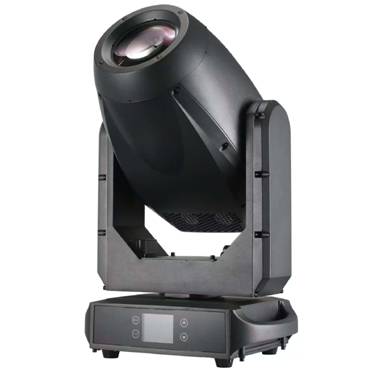
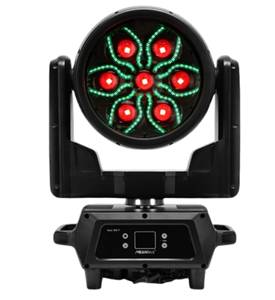
Outdoor moving heads
Pixel bars and strips
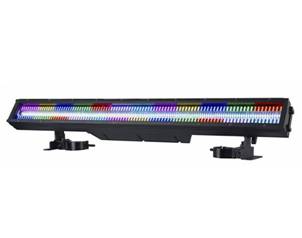
IP65 BAR FX2
Outdoor pixel strobe wash bar for stage edges, set outlines and audience-facing effects.
View product →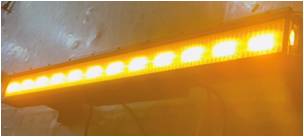
IP65 BAR FX3
Outdoor IP65 pixel bar for linear effects, stage outlining and festival set design.
View product →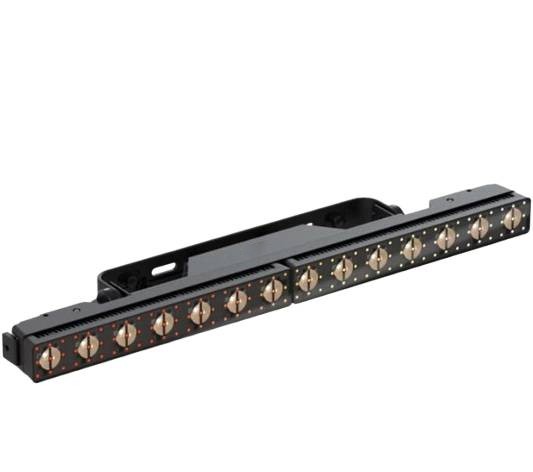
PIXEL STRIP DUO 200IP
IP65 pixel strip for linear accent and pixel-mapped effects on outdoor stages.
View product →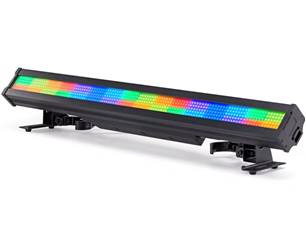
LED PIXEL STROBE BAR FX1
IP65 pixel strobe bar for impact hits and strobe effects on festival stages.
View product →Panels and strobes
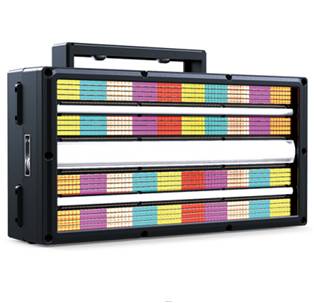
IP65 PANEL FX2
Outdoor pixel strobe panel for rear-truss impact and pixel-mapped looks.
View product →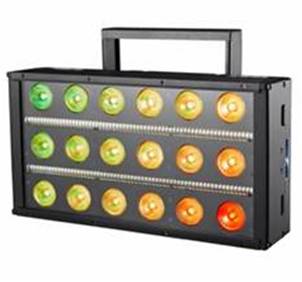
IP65 PANEL FX3
Outdoor IP65 panel for strobe, wash and pixel effects on festival sets.
View product →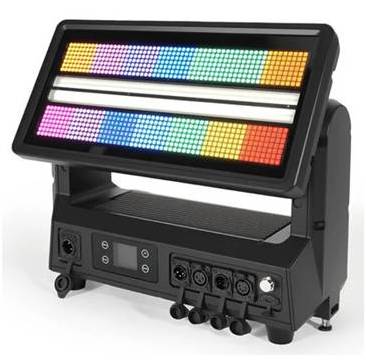
COLOR STRIKE M IP
Outdoor strobe and wash fixture for high-output impact moments and audience effects.
View product →Blinders, wash and cyclorama
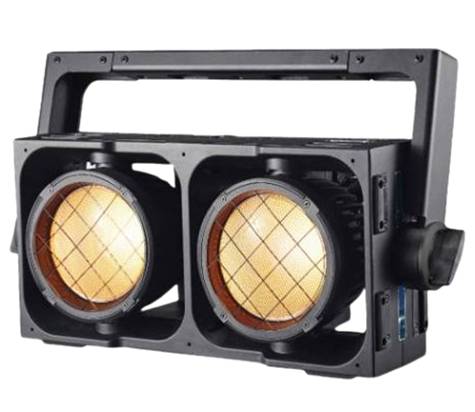
CLUSTER B2 FC LED BLINDER 600IP
2 × 300 W RGBAWW IP65 audience blinder for festival front truss and crowd moments.
View product →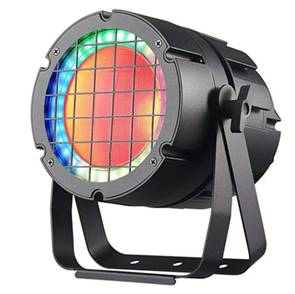
HaloPAR 350IP
350 W RGBAW IP65 par wash with RGB halo ring for front wash and audience light.
View product →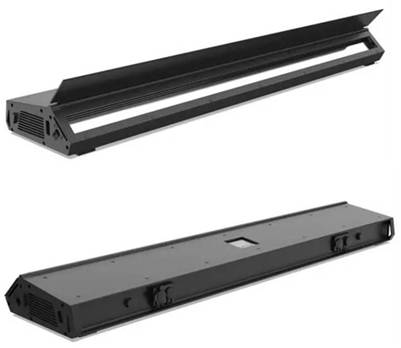
AURORA CYC 350 IP
IP65 full-spectrum cyclorama and performance wash for backdrop coverage and even colour.
View product →Need a mixed festival fleet? Send the stage dimensions, truss heights, show types and control system; the team can propose a combined package rather than a single fixture type.
11. Product comparison by festival role
The table compares the featured fixtures by the role they play on an outdoor stage. IP ratings and specifications are as stated on each product page; confirm the exact configuration and documentation in the quotation.
| Fixture | Festival role | Environment | Typical position | Check first |
|---|---|---|---|---|
| STORM 300BSW IP | Hybrid beam / spot / wash | IP65 | Mid and rear truss | Aerial output, zoom range, clone consistency |
| MAC 760 AURA FXIP | Wash / aura effect | IP65 | Rear truss, side towers | Wash uniformity, aura effect control |
| IP65 BAR FX2 | Pixel bar / strobe wash | IP65 | Set edges, risers | Pixel mapping, segment control, connector caps |
| IP65 BAR FX3 | Pixel bar / linear effects | IP65 | Set edges, backdrop frame | Mapping, mounting options, cable routing |
| PIXEL STRIP DUO 200IP | Pixel strip / accent | IP65 | Linear accents, riser edges | Mapping, bend radius, fixing method |
| LED PIXEL STROBE BAR FX1 | Strobe bar / impact | IP65 | Rear truss, risers | Strobe rate, zone control, heat management |
| IP65 PANEL FX2 | Pixel strobe panel | IP65 | Rear truss | Output, pixel resolution, mounting size |
| IP65 PANEL FX3 | Panel / strobe / pixel | IP65 | Rear truss, set pieces | Zone control, weight, rigging points |
| COLOR STRIKE M IP | Strobe / wash impact | IP65 | Rear truss, risers | Output, strobe behaviour, dimming |
| CLUSTER B2 FC 600IP | Audience blinder | IP65 | Front truss, aimed at crowd | Output, warm-white quality, beam angle |
| HaloPAR 350IP | Front wash / audience | IP65 | Front truss | Colour consistency, halo ring control, dimming |
| AURORA CYC 350 IP | Cyc / backdrop wash | IP65 | Upstage floor, low truss | Uniformity, blending, colour quality |
For guidance on combining these roles with moving heads, see the beam vs spot vs wash moving head guide.
12. Common festival specification mistakes
- Buying the label, not the evidence. An IP65 badge without a test report for the exact model and configuration proves nothing.
- Assuming a covered stage is dry. Open-sided stages take wind-driven rain even under a roof.
- Ignoring connectors. Unused outputs left uncapped are the single most common water path.
- Undersizing power. Connecting more fixtures per chain than the connector or the manufacturer allows.
- Treating truss rating as wind rating. Temporary structures need a wind-rated design, not a generic load table.
- No spare ratio. A festival weekend without spares turns one failure into a lost show.
- Sizing by wattage. Beam angle and illuminance at the throw decide coverage, not the LED wattage.
- No load-in test. Discovering a dead fixture during the headline set is avoidable.
13. Load-in acceptance test
Define the acceptance criteria before the equipment leaves the warehouse, then repeat the same checks at load-in. On a festival site you have one window to find problems, and it is before the gates open.
Before power-up
- Inspect every connector, gland and seal for damage or missing caps.
- Check cable jackets and look for kinks at the gland entry.
- Confirm mounting orientation matches the manufacturer's guidance.
- Confirm safety bonds are fitted independently of the primary clamps.
At power-up
- Power every fixture individually and confirm it boots and responds.
- Verify DMX address, channel mode and firmware version against the patch sheet.
- Run pan, tilt, zoom, dimming and colour through the full range.
- Check for unusual noise, fan behaviour or heat at the housing.
Before doors
- Record serial numbers and firmware versions for the fleet on site.
- Confirm spares are on the shelf and that the crew knows where they are.
- Agree the stop-work wind speed and the order in which fixtures come down.
- Keep a reference unit aside for matching colour and output if a fixture is swapped in.
14. Project references
These case studies show how outdoor fixtures, strobe and wash roles and festival lighting are combined in real rental and touring projects.
- Middle East festival and indoor club project — festival, club and live-entertainment fixture mix.
- European touring strobe wash project — layered strobe, blinder and FX roles for touring productions.
- Vietnam rental stage lighting OEM project — rental fleet consistency and repeat supply.
15. Frequently asked questions
Is IP65 enough for an outdoor music festival?
IP65 is usually an appropriate starting point for a festival stage: it is dust tight and protected against water jets. It is not rated for immersion, and it does not automatically cover connectors, cable entry or mounting. Check the test report for the exact model and configuration, and inspect the connectors and glands before the event.
Can I use indoor fixtures outdoors if it is not raining?
An indoor fixture is not designed for dust, condensation or wind-driven rain, and a forecast can change during a multi-day event. For a festival stage that stays rigged for several days, specify an outdoor-rated fixture rather than relying on the weather holding.
What IP rating do I need for festival lighting?
IP65 is the common choice for outdoor stage fixtures. A higher water rating may be relevant for fixtures mounted where they can be pooled or submerged, but confirm what the higher rating actually covers and whether it applies to the connectors and cable entry as installed.
How many lights do I need for an outdoor festival stage?
There is no reliable fixtures-per-metre rule. Calculate coverage from the throw distance and beam angle: coverage diameter is approximately 2 × distance × tan(beam angle ÷ 2). Divide the stage width by that figure, add 20–30% overlap, then add a spare ratio based on your service history.
How much power does a festival lighting rig need?
Add the rated power consumption of every fixture on the circuit, then add roughly 20% headroom for inrush and distribution losses. Check the result against the distribution you will actually be given, and confirm the daisy-chain limit for the connector and cable type you plan to use.
Why do IP65 fixtures still fail in rain?
Most field failures happen at the interfaces rather than the housing: uncapped connectors, glands closed on the wrong cable diameter, water tracking along cables, or condensation drawn in by temperature cycling. Correct cable management and connector protection matter as much as the enclosure rating.
Should festival fixtures be IP65 or IP67?
IP65 covers dust tightness and water jets, which suits most stage-mounted festival fixtures. IP67 adds protection against temporary immersion, which is relevant only if the fixture can actually be immersed. Specify the rating that matches the mounting position rather than the highest number available.
How do I check an IP65 claim before buying?
Ask for the test report, not a logo: which standard was used, which laboratory tested it, and which exact model and configuration the report covers. Then inspect the connectors, cable entry and seals on a sample, because those determine how the fixture behaves in service.
Can pixel bars and blinders be used in rain?
Outdoor-rated pixel bars and blinders are designed for weather-exposed stages, but the same interface rules apply: cap unused outputs, use drip loops, and keep connectors mated or protected. Confirm the rating for the exact model and check the connector type before the event.
What should I confirm in the quotation for festival fixtures?
Confirm the exact model and configuration, the IP rating and its supporting test report, rated power and daisy-chain limits, connector type and supplied caps, packaging, spare parts, warranty policy, MOQ and lead time. These are project-dependent and should be written into the quotation rather than assumed from the product page.
16. Next step
If you are specifying a festival rig, send the stage dimensions, truss heights, show types, quantities, control system and site conditions. The engineering team can review the fixture mix, power distribution and IP requirements, and prepare a project-specific quotation.